CIRCA
Trusted pregnancy support, from day one.


CIRCA is a text-based AI pregnancy support service from Penn Medicine’s PEACE program, built for the uncertain weeks between a positive test and a first prenatal visit. Adoption was low. Our team redesigned CIRCA from a clinical information tool into a trust-centered support service, improving how it sounded, responded, and introduced itself to patients.
Problem
Between a positive test and a first appointment, there’s almost no reliable support
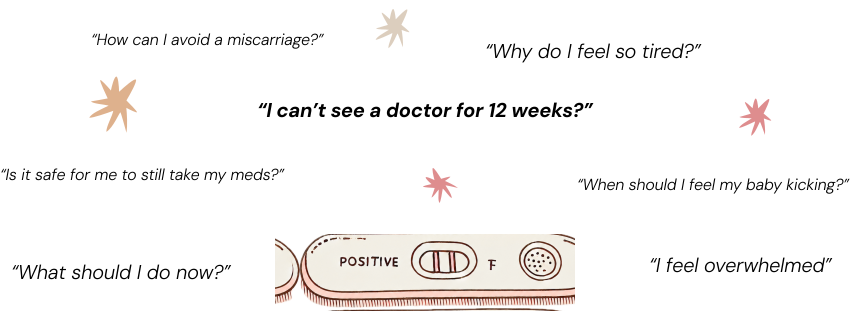
Most women can’t see a doctor until around week 12. In that limbo, worry builds and reliable answers are nowhere to be found.
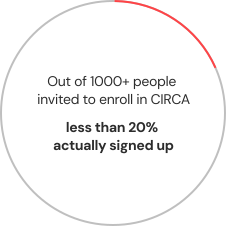
Penn Medicine built CIRCA to fill the gap — but patients weren’t signing up
CIRCA is a text-based support service from Penn Medicine’s PEACE clinic, designed to give women reliable, clinician-backed answers during those early weeks through an AI chatbot. But it wasn’t landing. The challenge wasn’t just improving CIRCA’s answers — it was making the service feel trustworthy enough to try in the first place.
CIRCA offers 24/7 access to clinically approved answers — a real gap-filler for women navigating early pregnancy without a doctor to call.
But the experience had significant friction. Due to NLP limitations, interactions felt robotic: responses were repetitive, inputs were rigid (e.g., “Y” or “N”), and there was no natural conversation flow. More critically, CIRCA lacked emotional support, leaving users feeling unseen during vulnerable moments. Occasional account deactivations added to the frustration.
Actual CIRCA User Screenshots
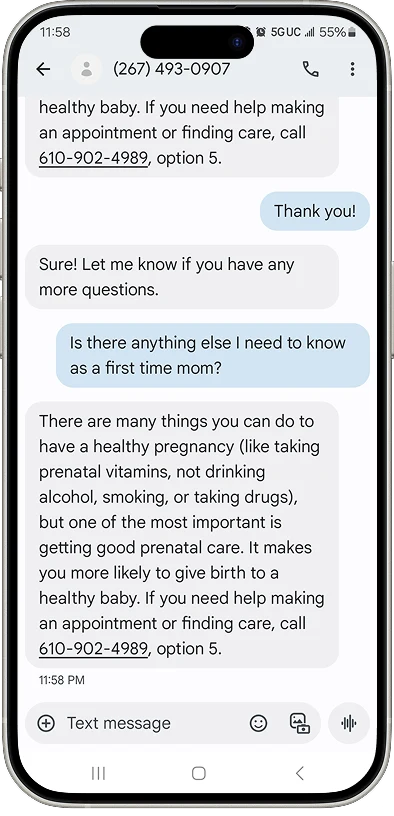 Helpful response
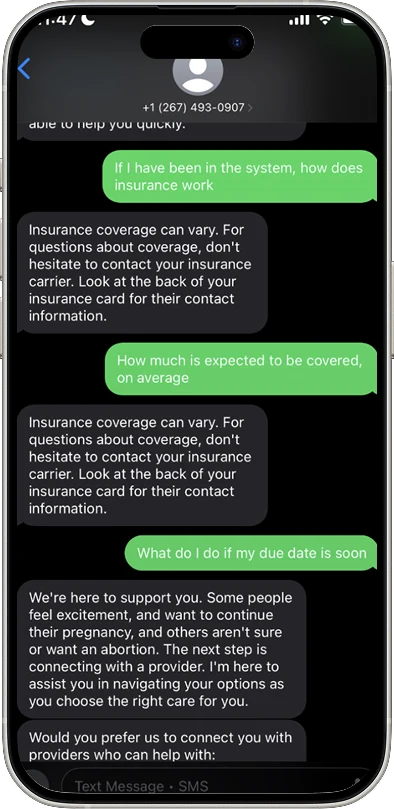 Repetitive messaging
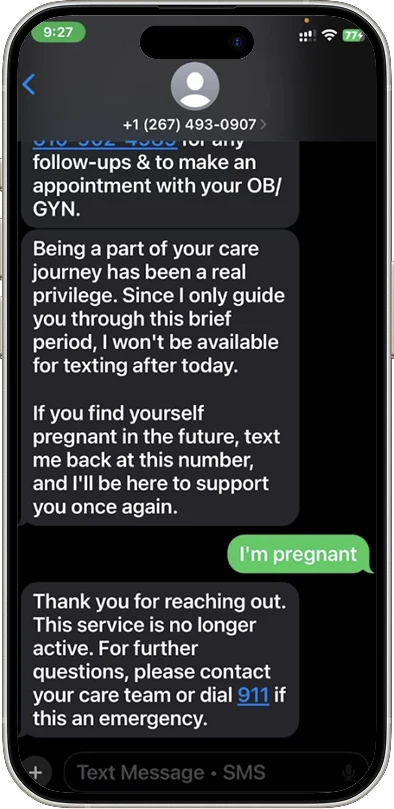 Account deactivated
Approach
We approached CIRCA’s redesign as a trust problem, not a feature problem.
The existing service was clinically sound, but emotionally distant, and adoption remained low among the patients it was built to support.




My Contribution
I led the AI persona and tone strategy, defining the hybrid model that shifts CIRCA’s responses between calm-factual and warm-validating modes depending on what a patient is asking. I proposed and designed the pre-enrollment embedded chatbot preview, redesigned the onboarding flow and copy, and designed the safety escalation flow. On research, I led the Reddit forum analysis and co-drafted the user journey map alongside the team. The deployment roadmap, website, poster, and service flow diagrams were collaborative or led by teammates.
Adaptive Voice
Behind every symptom question is an emotion that also needs an answer
When women reach out with a question, they’re rarely just after medical facts. They want reassurance and validation too. The best answers carry both: the information and the emotional support.
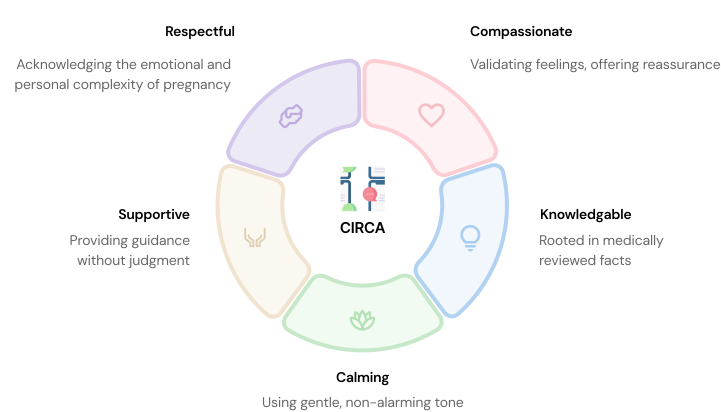
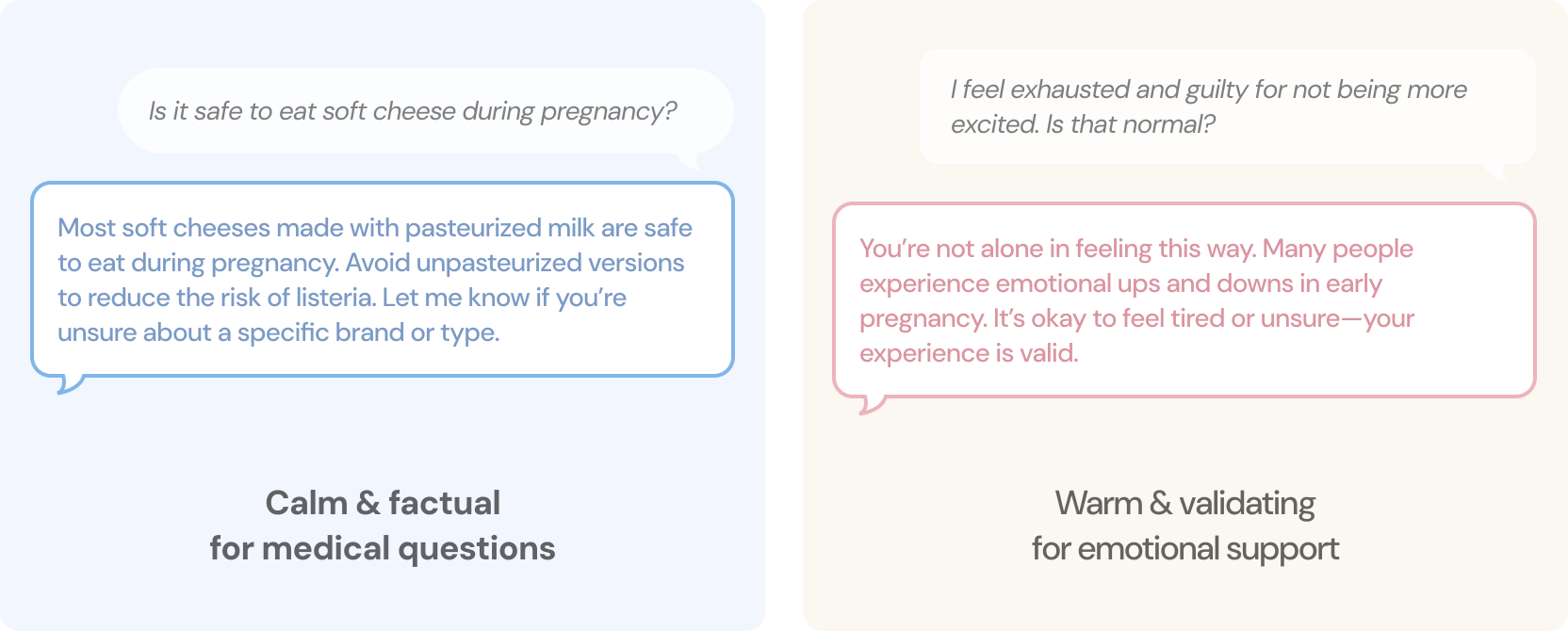
We gave CIRCA a voice that adapts to what’s being asked
AI personaRespectful, supportive, calming, compassionate, and clinically grounded; each attribute maps to a trust barrier from research, balancing non-judgmental warmth with Penn Medicine's clinical authority.
Hybrid tone modelCIRCA shifts its tone to match the question: calm and factual for medical ones, warm and validating for emotional ones.
Improved NLP with ChatGPT APICIRCA’s answers come from Memora Health’s databank of clinically approved responses. We added a ChatGPT layer that adjusts the language, keeping the medical accuracy intact while making each answer feel helpful and supportive rather than clinical.
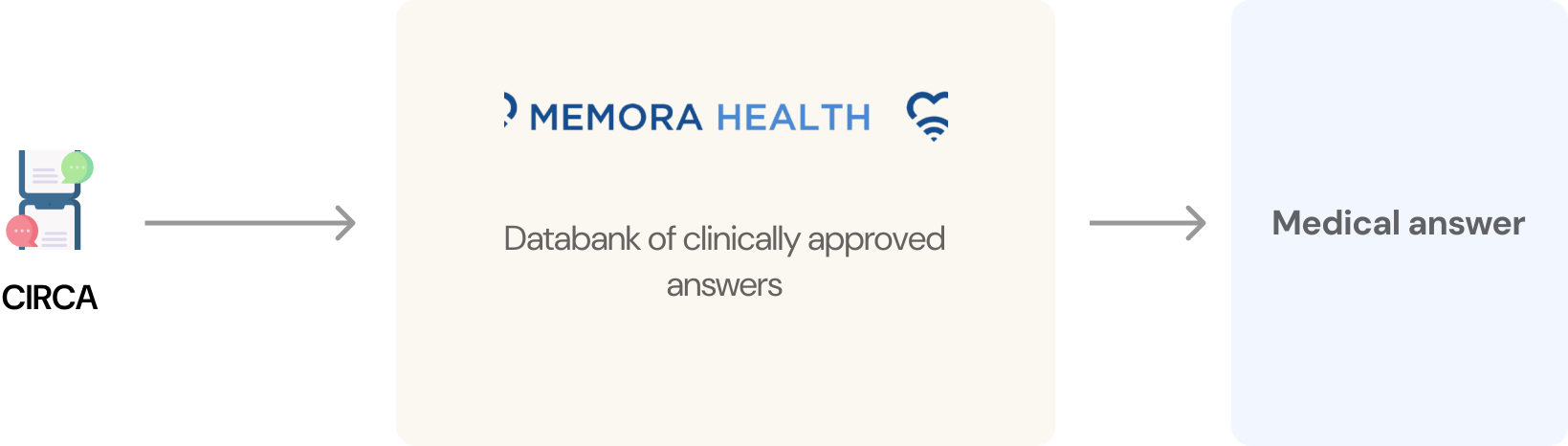
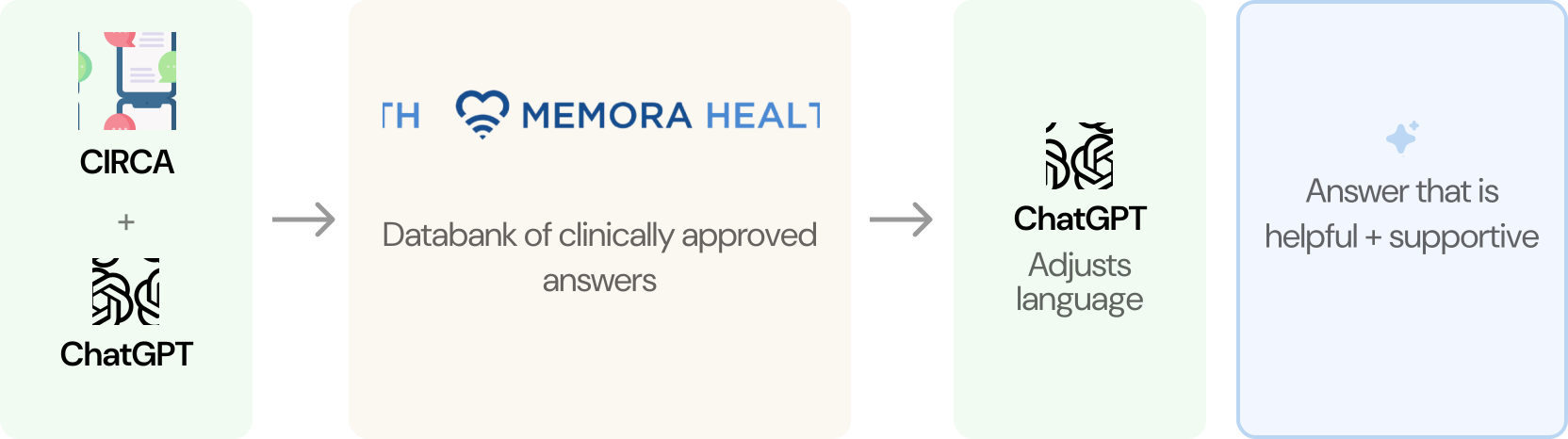
Same clinically-approved answers, delivered with warmth.
Safer Support Flow
A one-size-fits-all flow couldn’t adapt to wanted, unsure, or loss
No two pregnancies are the same, even for the same person the second time around. A single linear flow couldn’t meet users whose experiences ranged from excitement to uncertainty to loss. Each pregnancy journey can look drastically different.
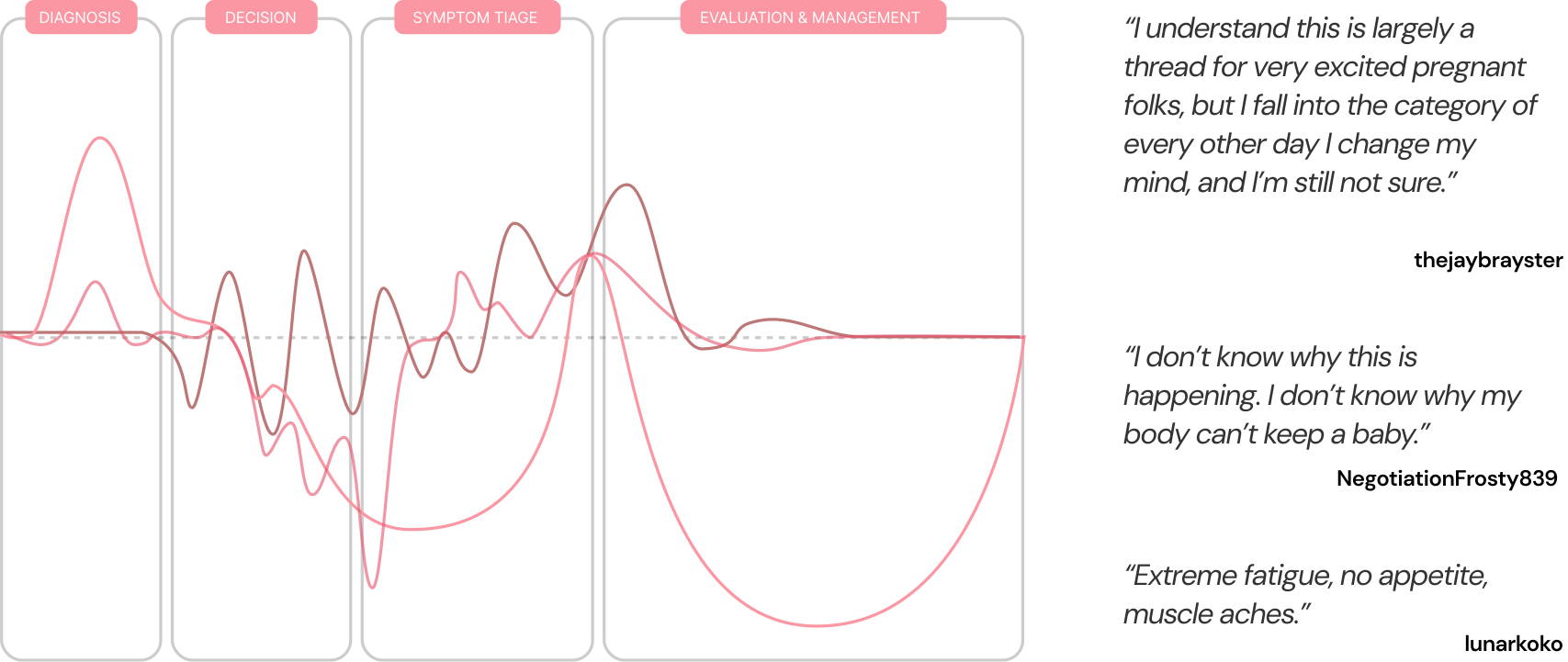
We built paths that match each person’s situation
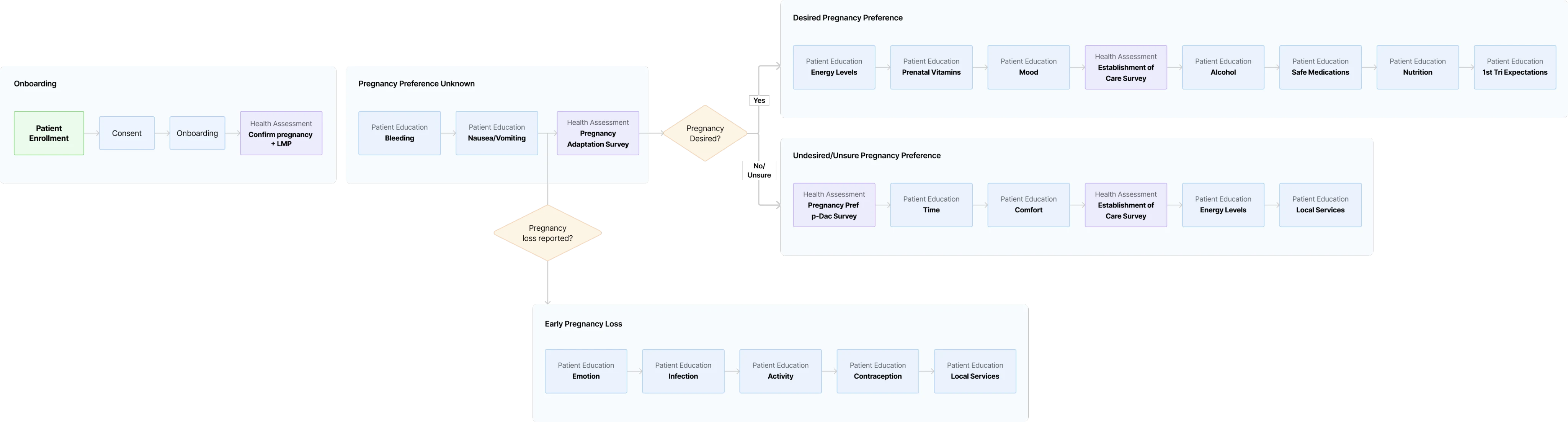
Redesigned workflowDifferent approaches based on pregnancy preference.
Redesigned Workflow
The redesigned flow routes users at a single decision point — their pregnancy preference — captured right after they confirm the pregnancy.
Desired and unsure paths: Branches into tailored support for users who are excited or uncertain, instead of one linear flow for everyone.
Pregnancy loss support: Adds a dedicated path for early pregnancy loss, where the original flow had none.
The adaptive flow also needed to handle moments where support alone wasn’t enough.
Red-flag alertsDetects high-risk language like thoughts of self-harm, responds with empathy, and routes the person to a human care specialist instead of an automated reply.
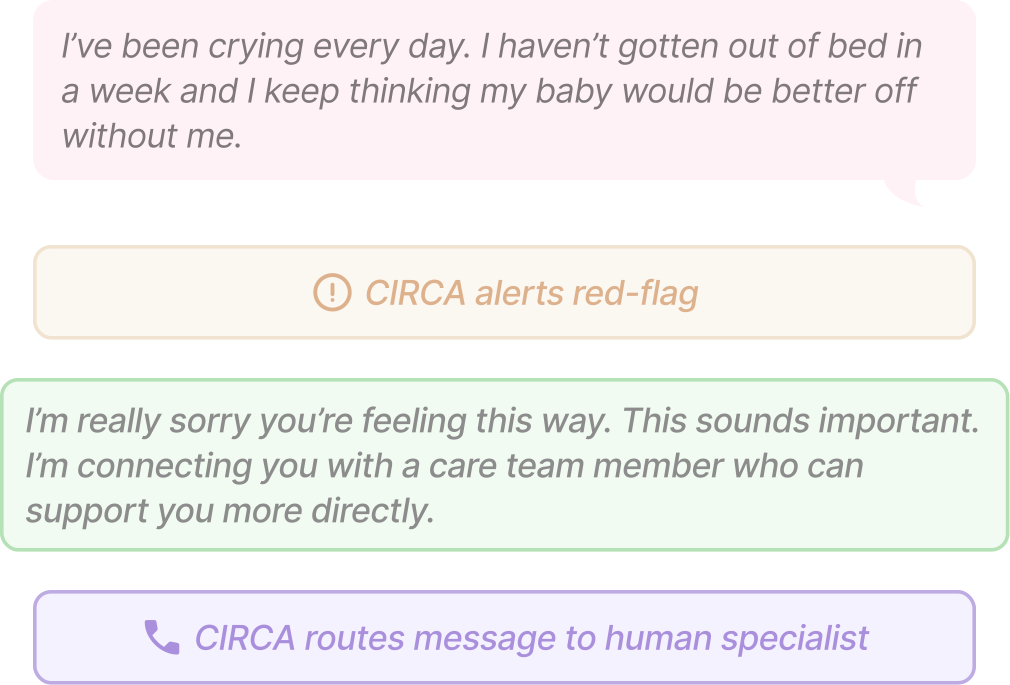
User is acknowledged, validated, and safely escalated to professional help.
The original onboarding buried the service name, skipped any emotional welcome, and made no attempt to earn trust before asking for consent.
Streamlined onboardingReplaces the long, cold, spammy intro with a warm, plain-language welcome that names CIRCA, notes it’s backed by Penn Medicine, and states upfront it’s not for emergencies.
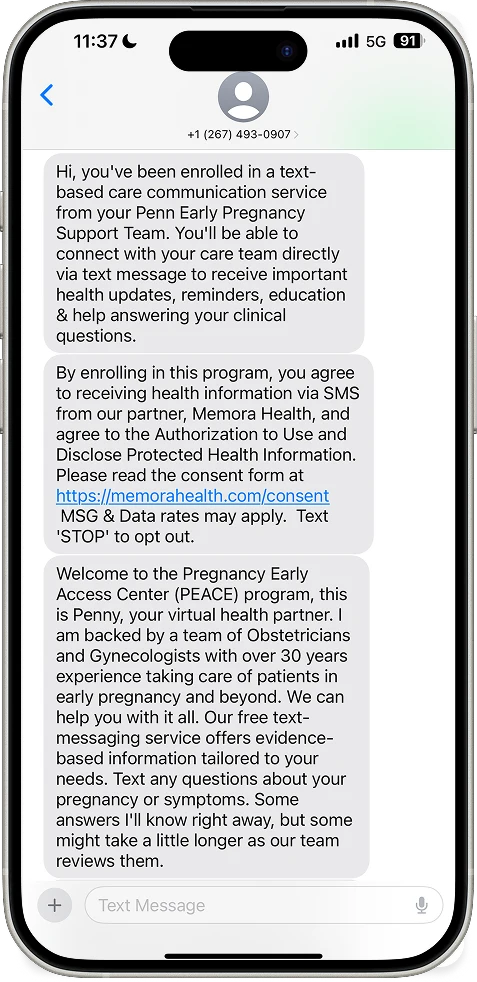
Long, clinical, impersonal. Didn’t name the service or explain why to trust it.
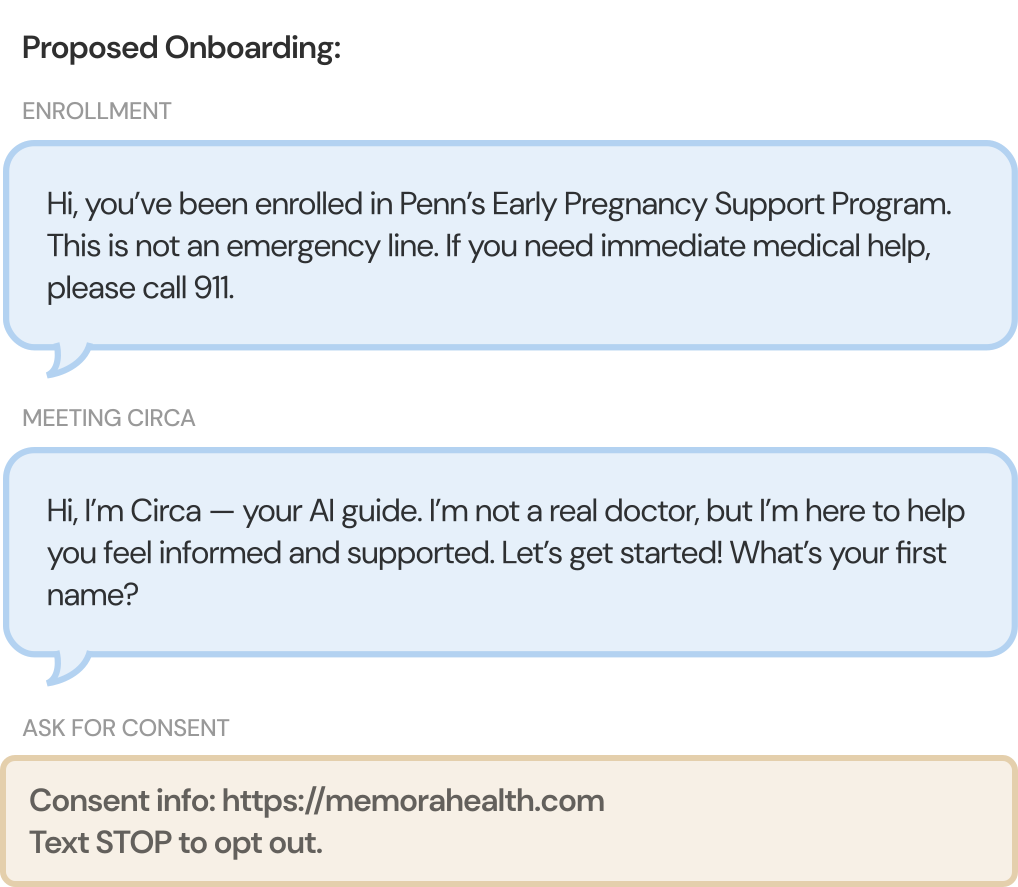
Warm, clear, and honest. Builds trust before the first exchange.
Trust Before Sign-Up
Trust starts with being found, and CIRCA was invisible
CIRCA’s outreach poster didn’t convey what the service was for, and online it had almost no presence. Users couldn’t trust, or even find, a service they didn’t know existed.
We made CIRCA easy to find, understand, and try
Poster redesignLeads with what CIRCA offers, building trust before the ask.
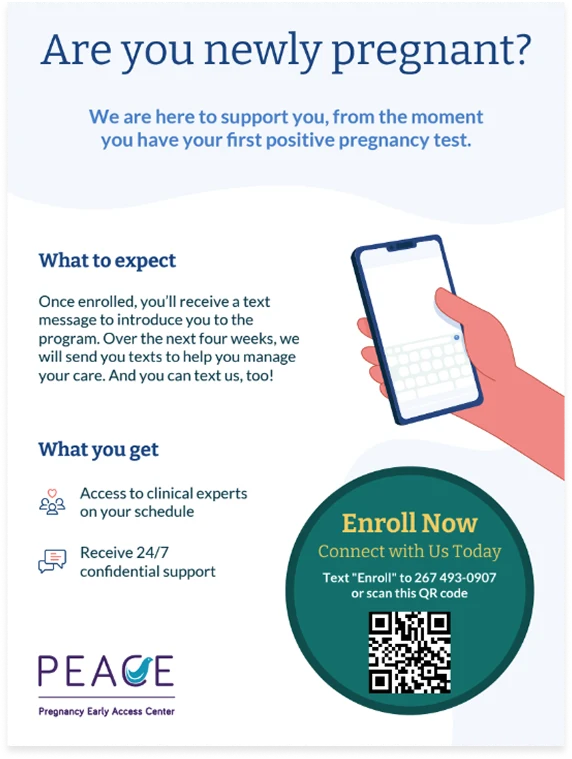 Before
No service name, no Penn Medicine branding, no clarity on what happens after you enroll. Generic imagery makes the purpose ambiguous, and the cold clinical palette signals authority without warmth, the wrong emotional register for an anxious first-time patient.
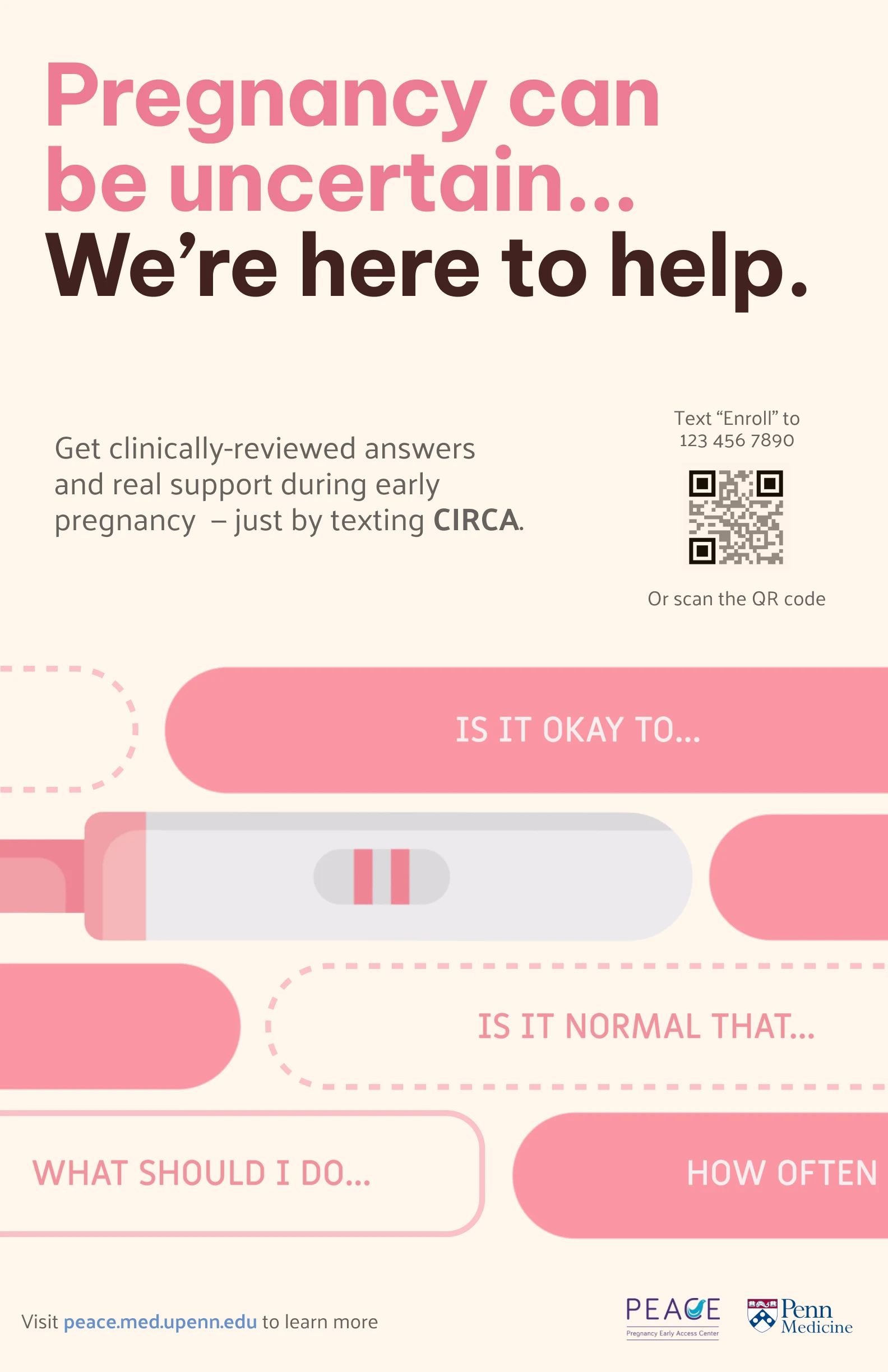 Proposed
A warmer color scheme and friendly tone make the service feel approachable. A clear program description, relevant visuals, Penn Medicine branding for credibility, and a link for more information give patients everything they need to trust and act.
We designed a layered discovery path: find CIRCA, understand it, try it, trust it.
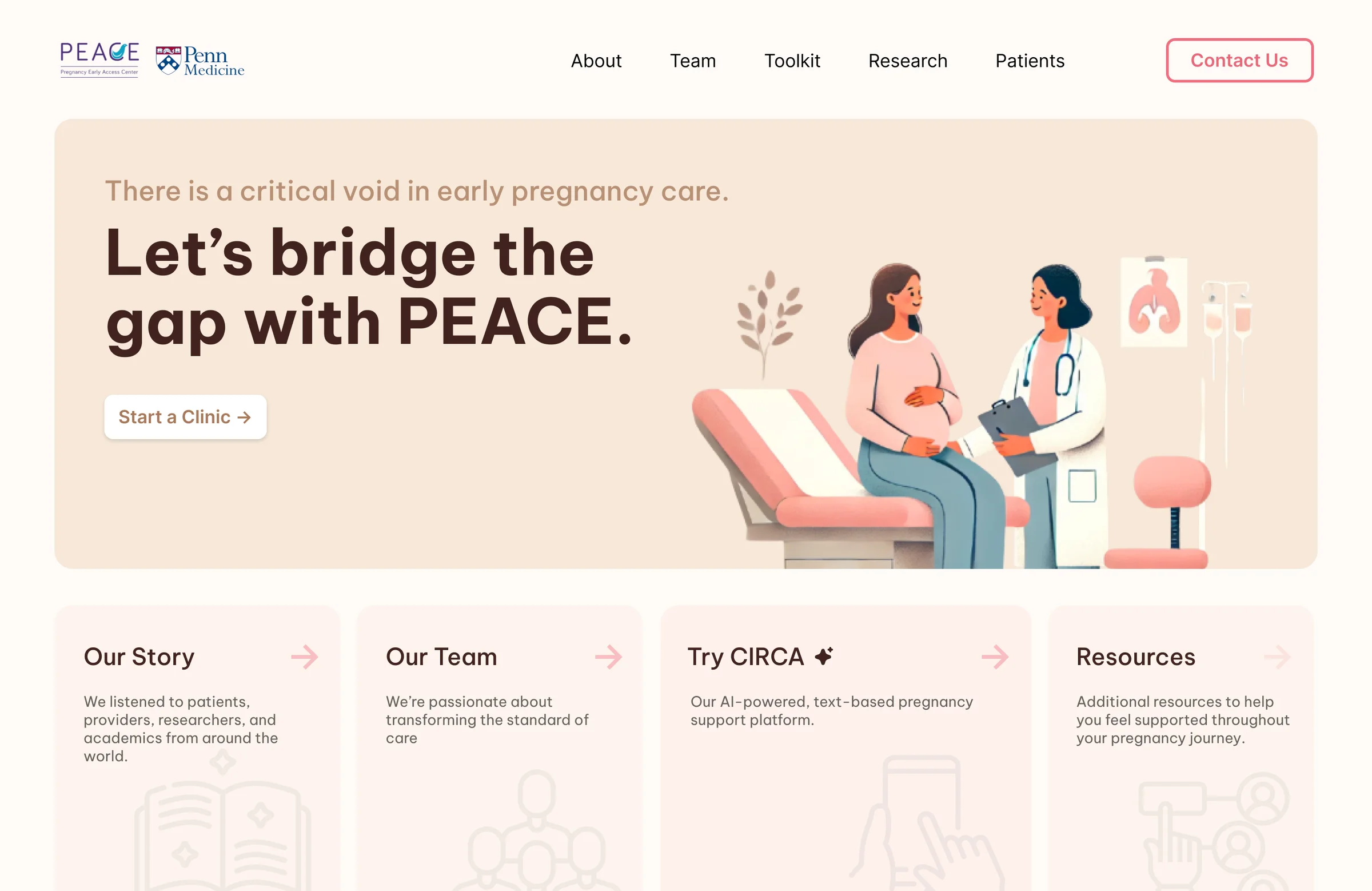
Website redesignWarmer, more welcoming PEACE site that leads with patient needs, not clinic credentials.
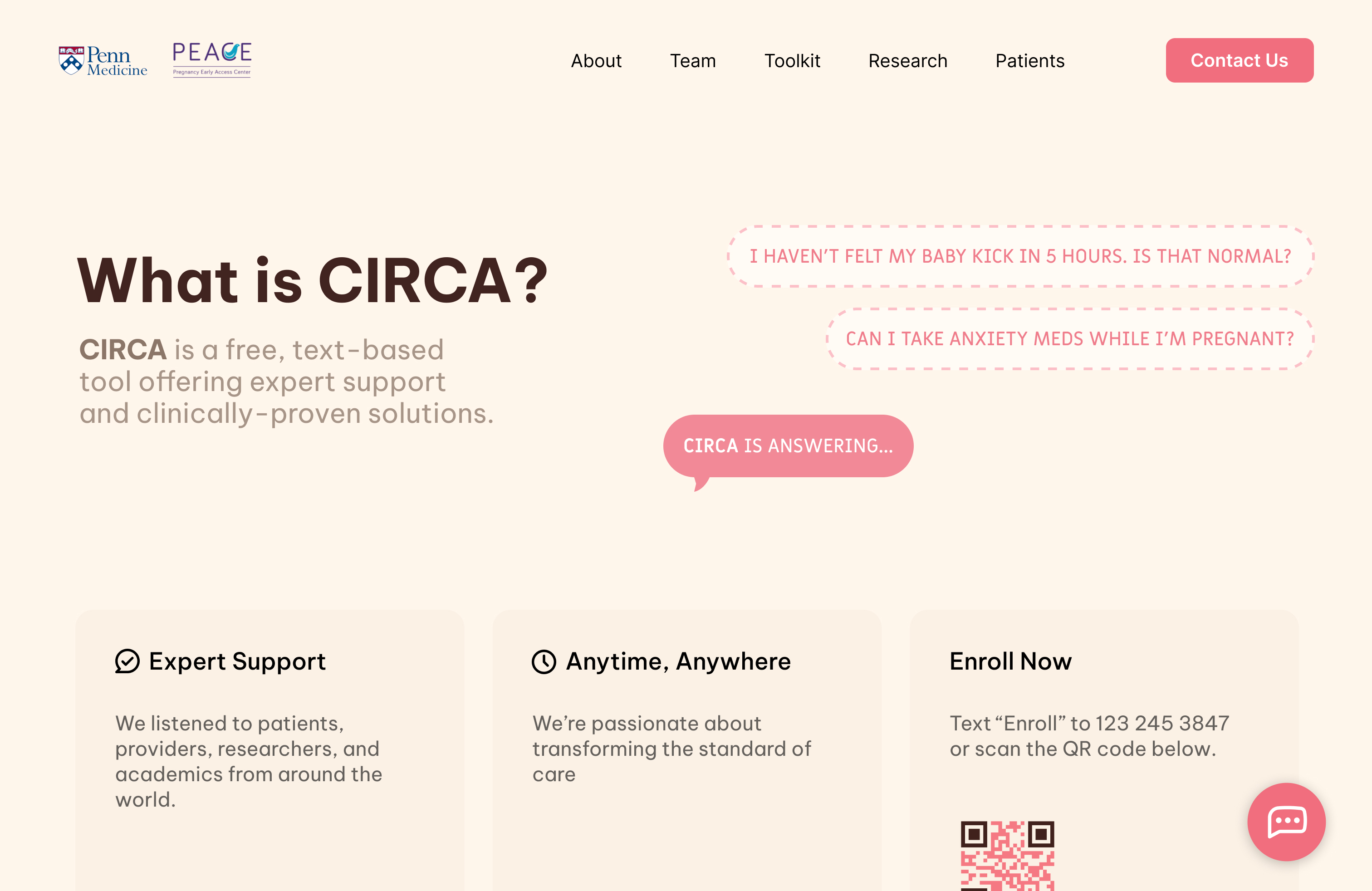
CIRCA landing pageA dedicated page to learn what CIRCA is, what it does, and who it’s backed by, before enrolling.
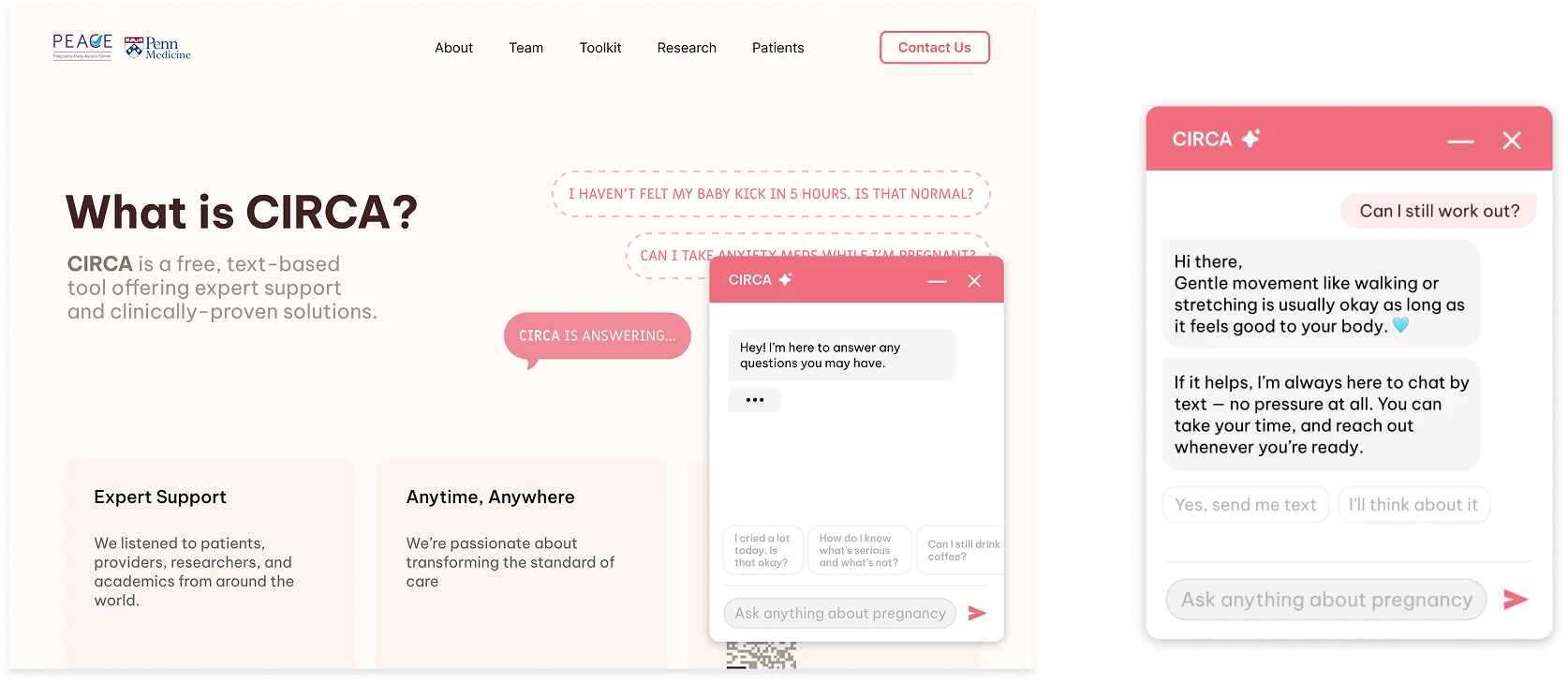
Try before signing upAn embedded chatbot preview lets users experience CIRCA’s voice and helpfulness before committing.
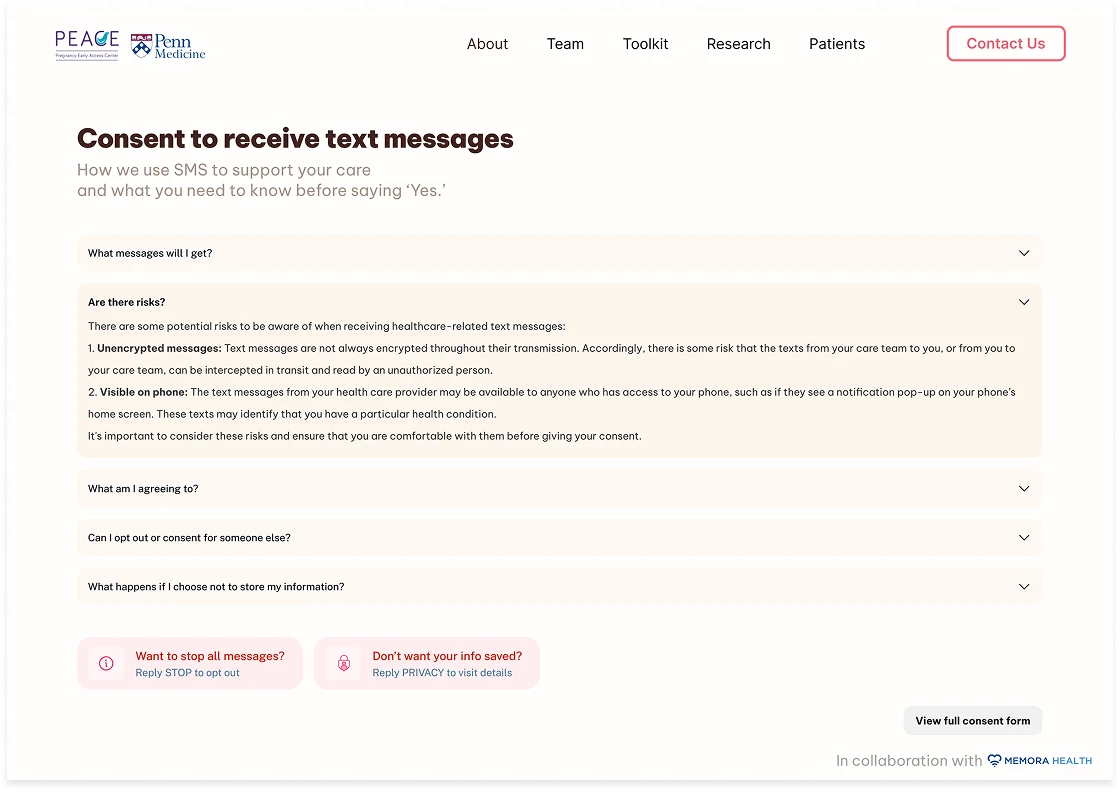
Transparent data handlingA plain-language privacy page that addresses the data concerns users raised directly in research.
Roadmap & Prioritization
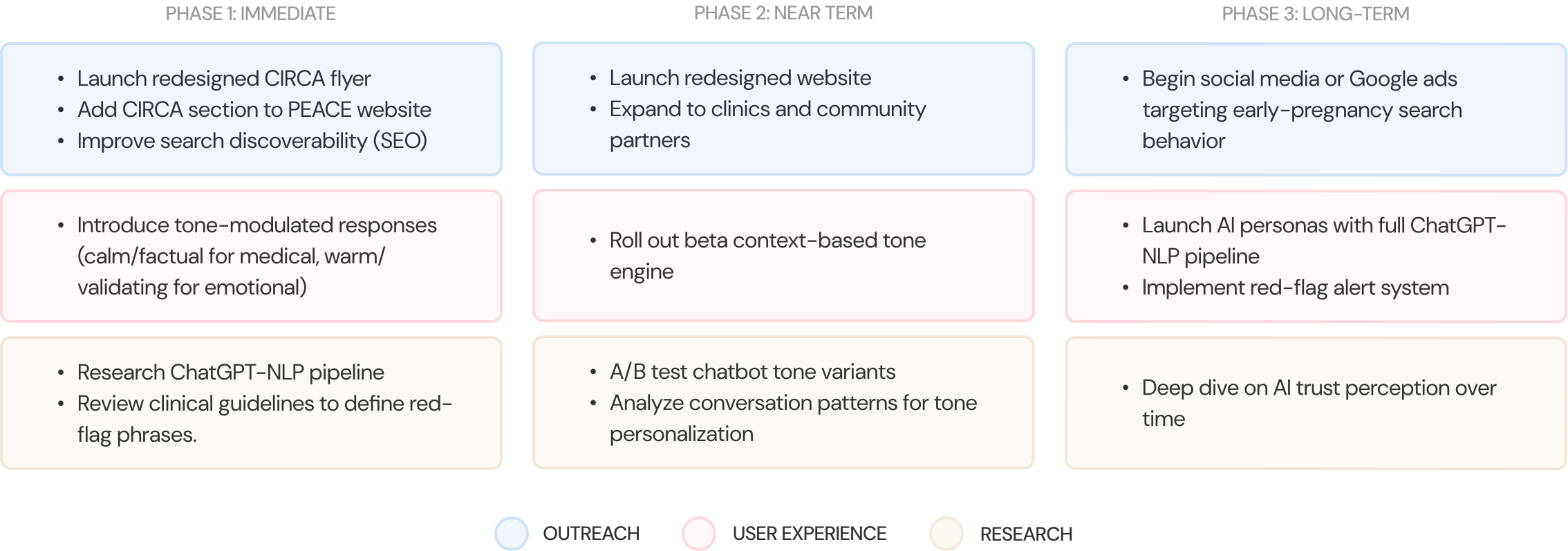
We prioritized changes by feasibility and trust impact across three phases: immediate outreach fixes, near-term UX improvements, and long-term research investments.
Reflection
CIRCA was a different kind of design challenge — less about building something new and more about understanding why something already built wasn’t landing. That distinction shaped everything. We came in spotting surface-level issues: repetitive messaging, responses that didn’t feel intelligent. It wasn’t until we understood how CIRCA actually operated — that every answer was handwritten clinical content, not dynamically generated — that the real constraint came into focus. The problem wasn’t the product’s tone. It was the architecture underneath it.
That realization reframed our entire approach. Instead of asking “how do we make this smarter,” we asked “how do we make this feel trustworthy within what it actually is.” The answer was designing trust at every layer — the first message a patient sees, the tone of each reply, the ability to escalate risk to a human, and how patients discovered CIRCA in the first place.
The biggest thing I took from this project: in sensitive healthcare contexts, a technically correct answer isn’t always a supportive one. AI in these moments shouldn’t only optimize for accuracy — it has to communicate its role clearly, respect emotional context, and know when to step aside for human care.
Let's work together.
Currently seeking full-time product design roles for 2026.