Anyi
Where Chengdu gathers.
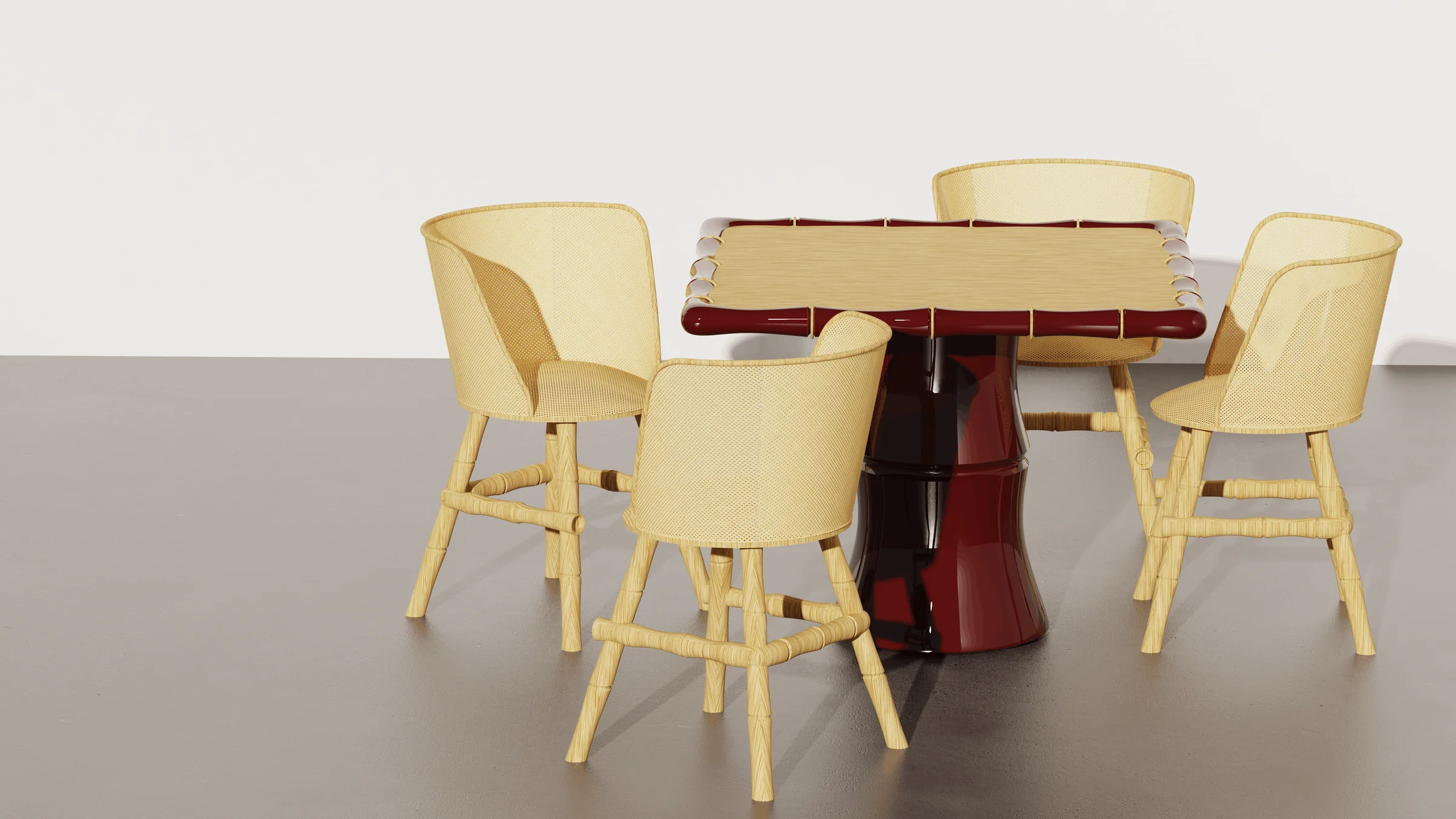
Anyi is a solo furniture design project rooted in Chengdu’s tea house culture. Starting from five cultural references — the city, tea culture, mahjong, bamboo and ceramic, and Chengdu lacquerware — the project translates the material language and communal spirit of Chengdu tea houses into a contemporary mahjong table and chair set. Each design decision traces back to a specific cultural source, from the cosmological three-part structure of the chair to the lacquerware-inspired gloss of the table base.
Overview
A furniture set shaped by the rituals of Chengdu tea houses
In Chengdu, tea houses aren’t just places to drink tea — they’re social spaces where people slow down, gather, watch traditional performances, and play mahjong for hours. Anyi takes that culture as its starting point, translating its relaxed rhythm, material language, and communal spirit into a contemporary mahjong table and chair set.
The name Anyi comes from the Sichuanese expression 安逸: ease, comfort, and the pleasure of unhurried gathering. Rather than solving a design problem, this project asks how furniture can carry cultural memory through form, material, and craft.
Cultural Grounding
The design began with the culture around mahjong, not the game alone
Five references shaped the project — the city, the ritual, the game, the materials, and the craft tradition. Together they form a layered system: Chengdu sets the emotional atmosphere; tea culture and mahjong define the ritual being designed for; bamboo, ceramic, and lacquerware supply the material vocabulary.
Known for its laid-back lifestyle, teahouse culture, and Sichuanese opera. The city’s sense of ease became the emotional foundation — the feeling the furniture should carry, not just the setting it references.

Chengdu tea houses are communal spaces for long, unhurried gatherings. The project uses the tea house as a cultural scene rather than treating the furniture as isolated objects.
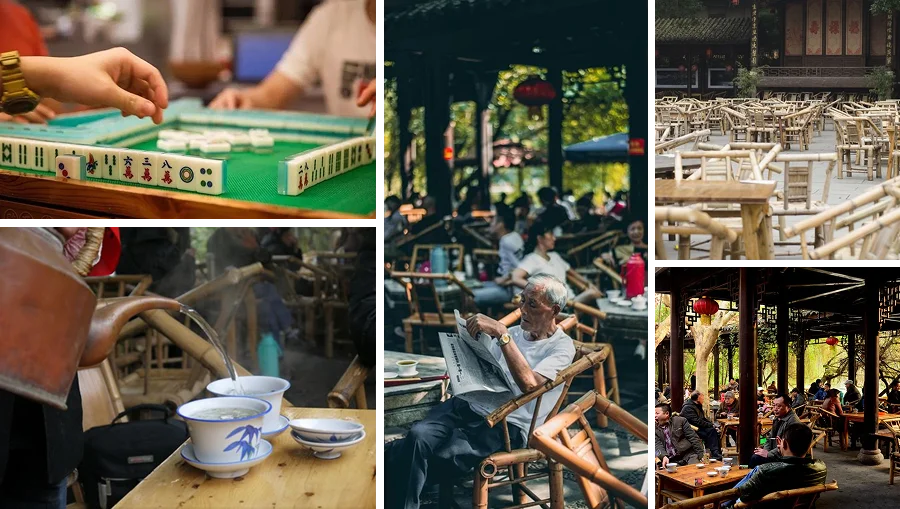
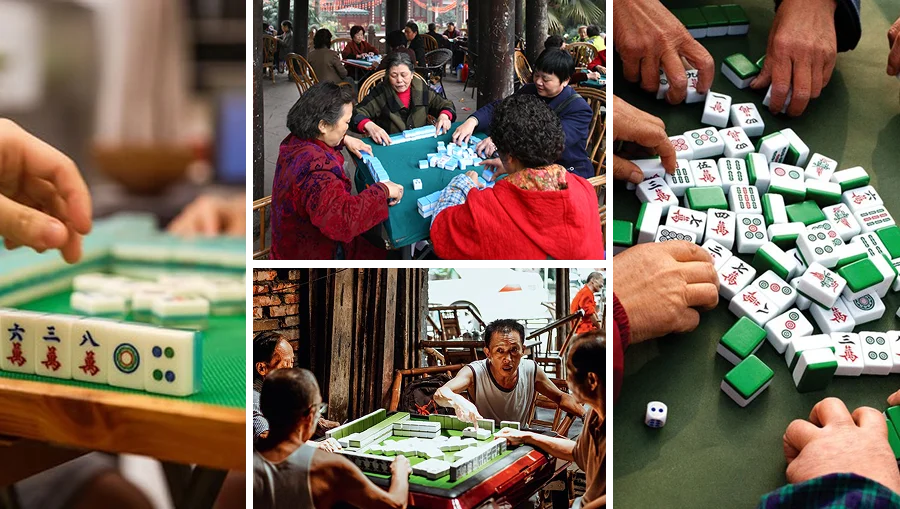
More than a game — a social ritual built around a shared table. Designing for mahjong meant designing for hours of seated play, for four people gathering together, for the texture of tiles on a surface.
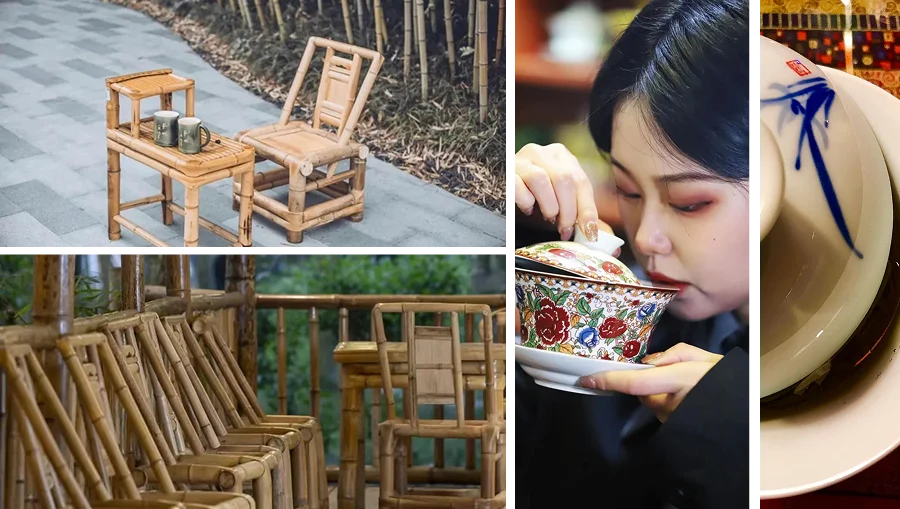
Selected because they’re native to the tea house environment. Bamboo references traditional Chengdu tea house chairs; ceramic comes from the Gaiwan tea vessel. Both carry cultural memory without needing decorative motifs to do it.
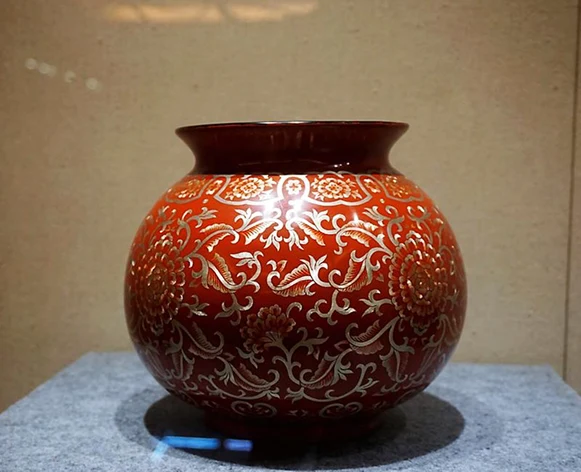
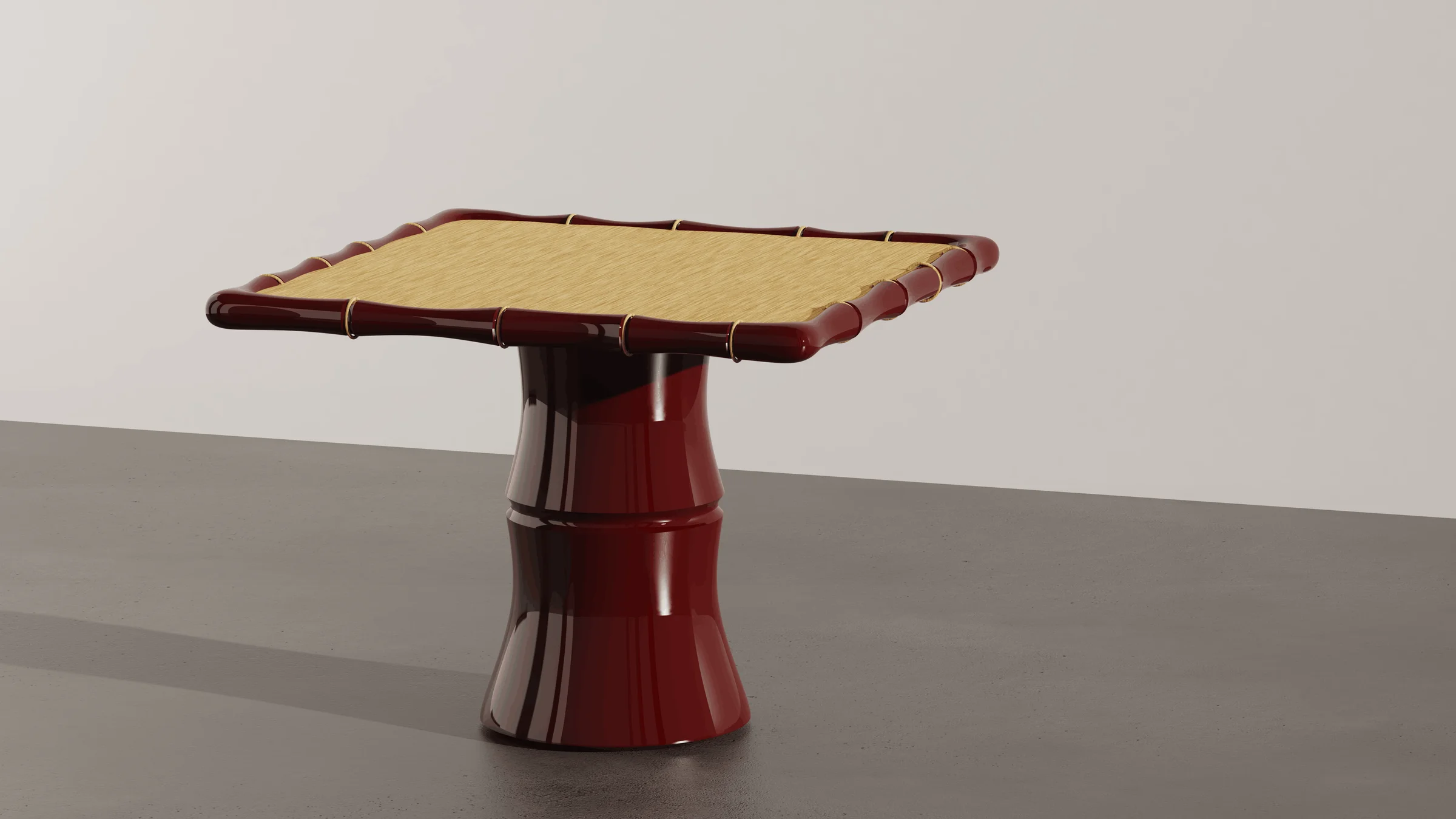
The table’s deep red finish references Chengdu lacquerware — a historic craft tradition known for its rich color and refined surface. The glossy finish was deliberate: in Chinese craft culture, lacquerware’s reflective surface reads as elevated and ceremonial, while keeping the form itself clean.
Form Exploration
Exploring a contemporary language for the Chengdu tea house
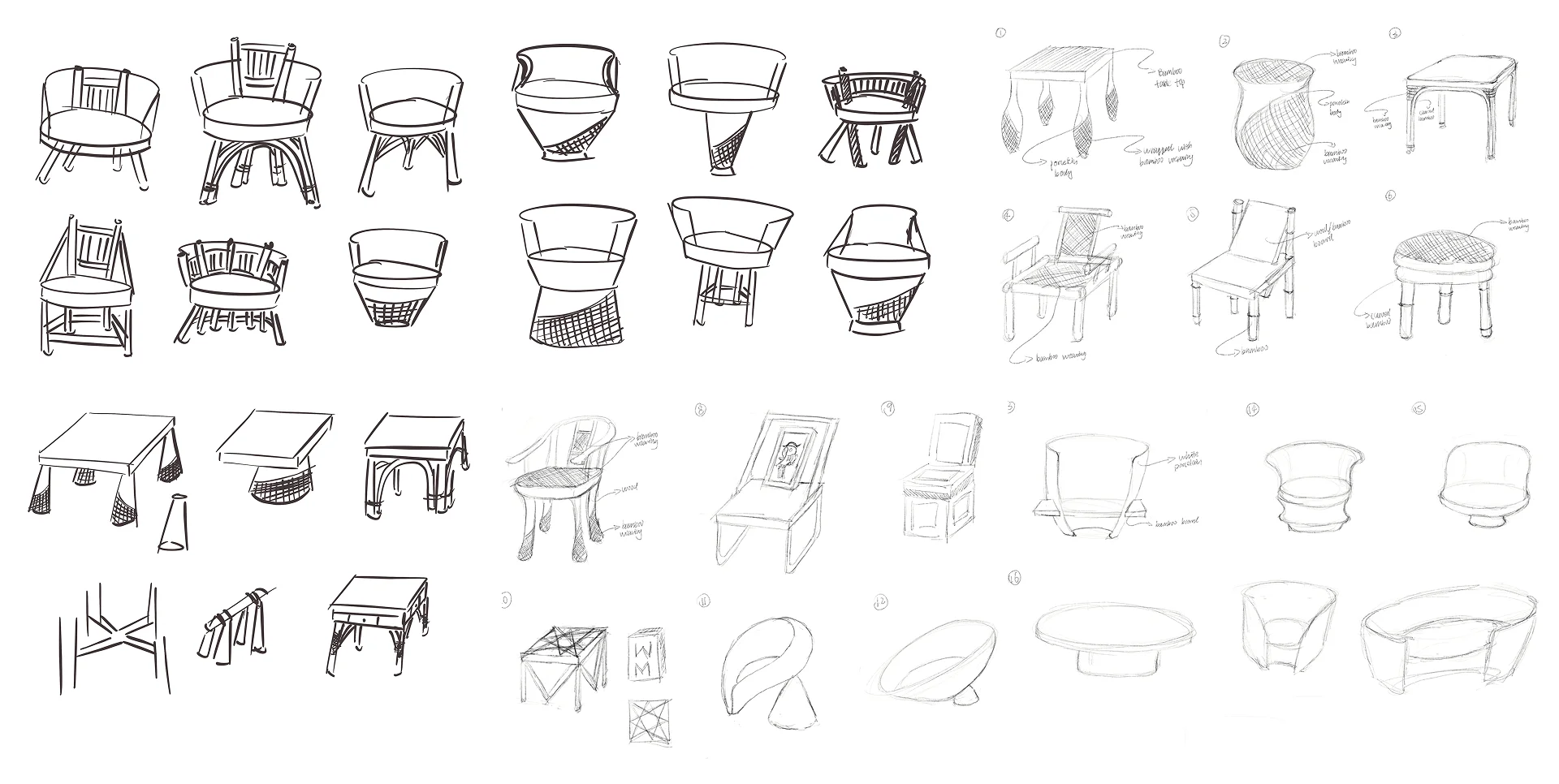
Early sketches explored how traditional tea house furniture could be reinterpreted as a contemporary mahjong set — looking at bamboo chair structures, rounded ceramic forms, and table proportions.
The central tension was between cultural legibility and contemporary form. Directions that borrowed too directly felt like replicas; directions that moved too far lost their grounding. The resolution was to focus on construction logic rather than surface ornament — keeping the posture, joinery, and material behavior of traditional forms while stripping away decorative detail.
Design Translation
Chair
Chinese cosmology shaped the chair’s three-part structure
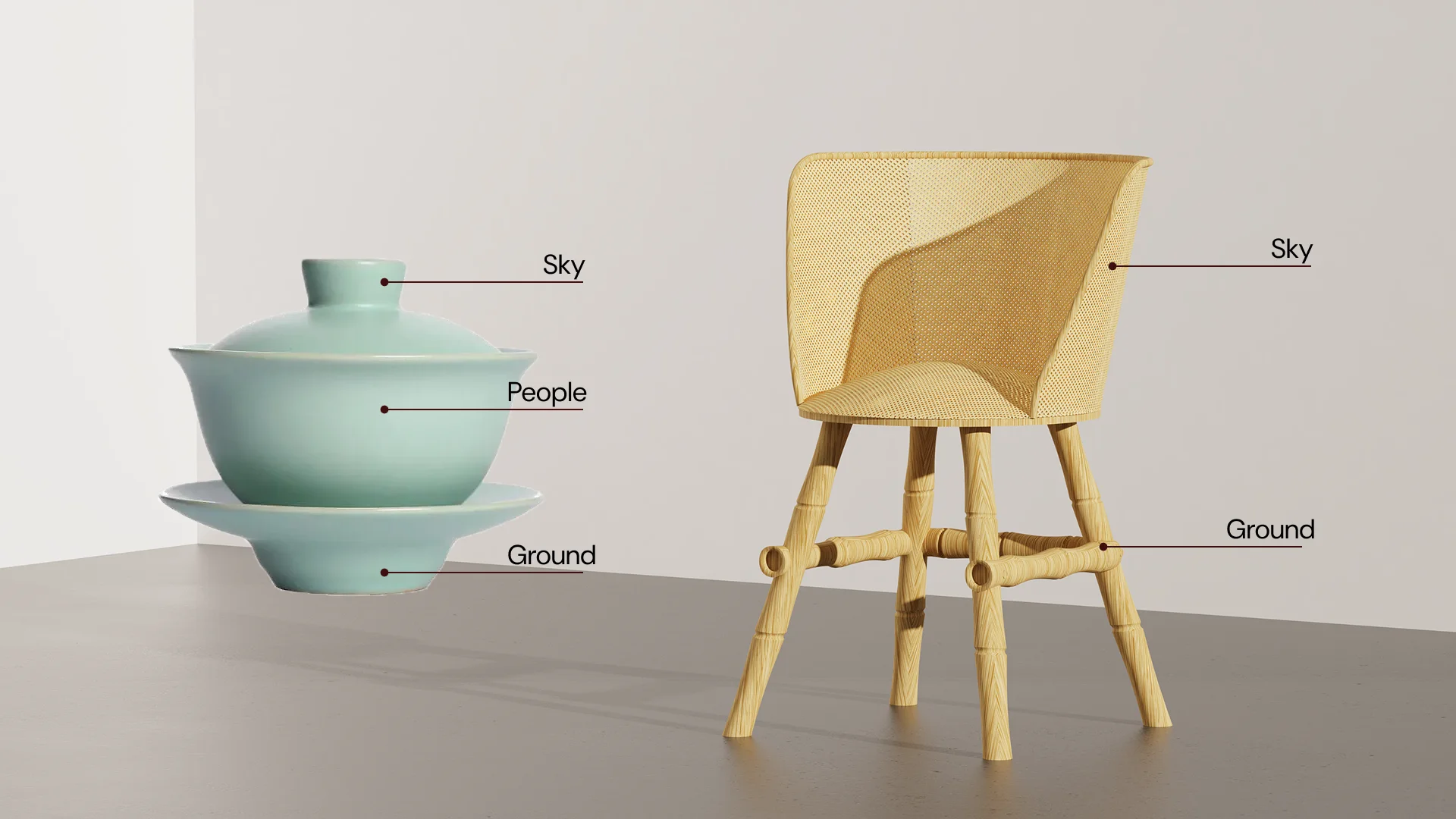
The chair draws from the cosmological structure of the Gaiwan tea vessel — sky, people, and ground — translated into back (sky), seat (people), and legs (ground). The structure gives the chair symbolic organization while keeping the form simple. It also creates a quiet visual echo between the object you sit in and the object you drink from.
Traditional Chengdu bamboo chairs informed the chair’s posture
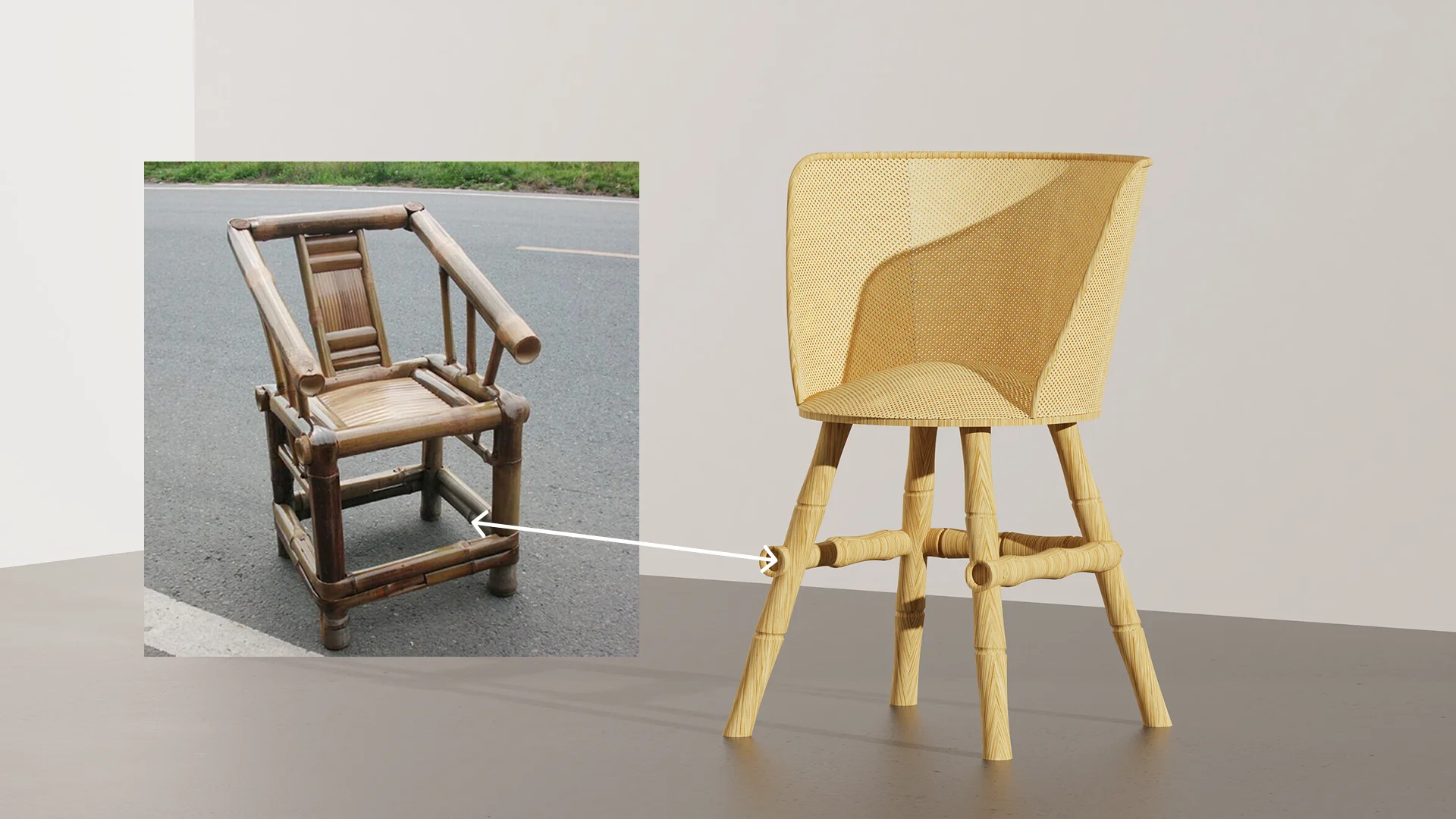
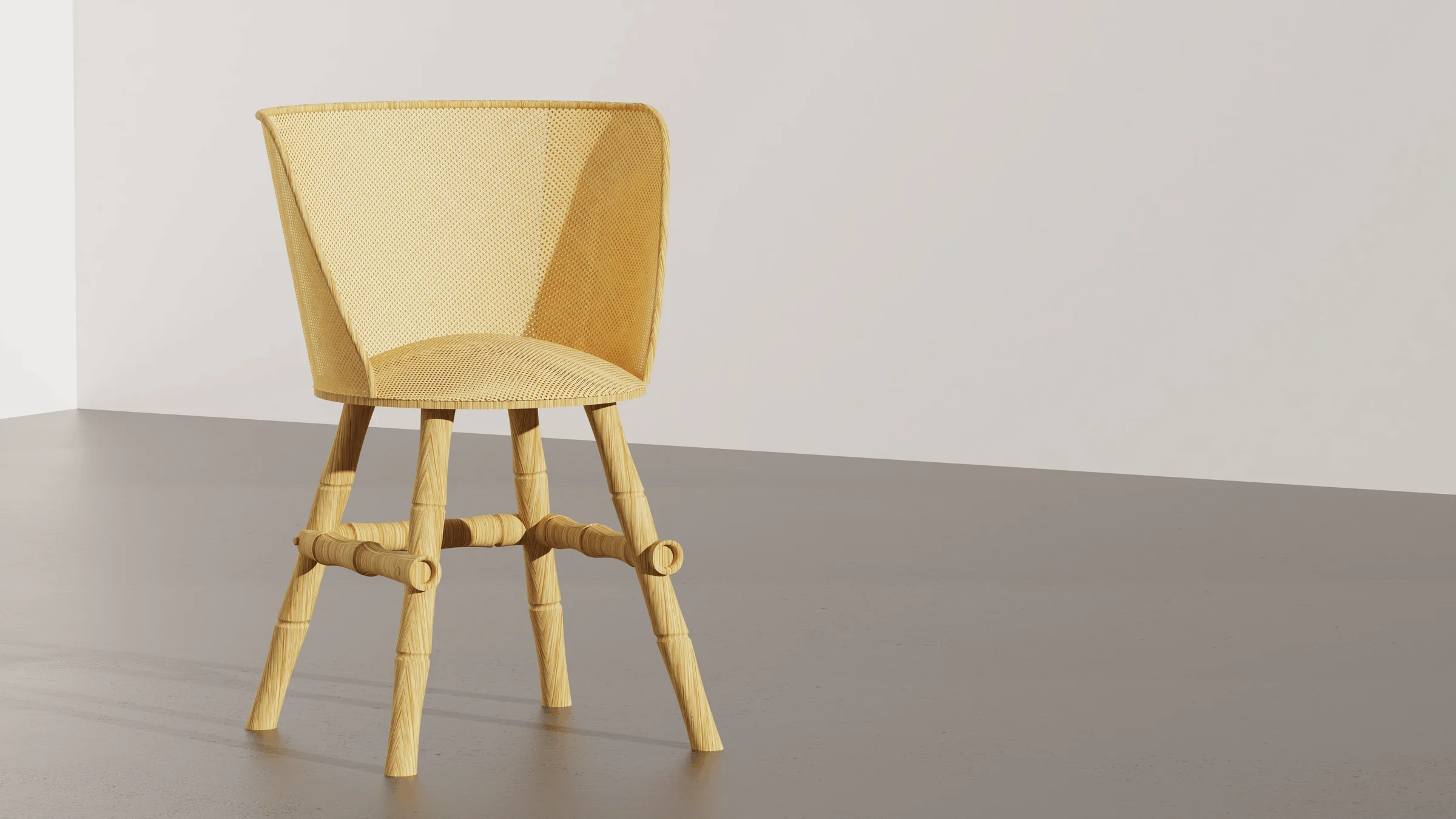
The outward-splayed legs, low cross-rung detail, and lightweight structure of traditional Chengdu bamboo chairs informed the overall posture. Rather than reproducing the traditional chair, the construction logic was adapted into a cleaner, more contemporary silhouette — familiar in spirit, new in form.
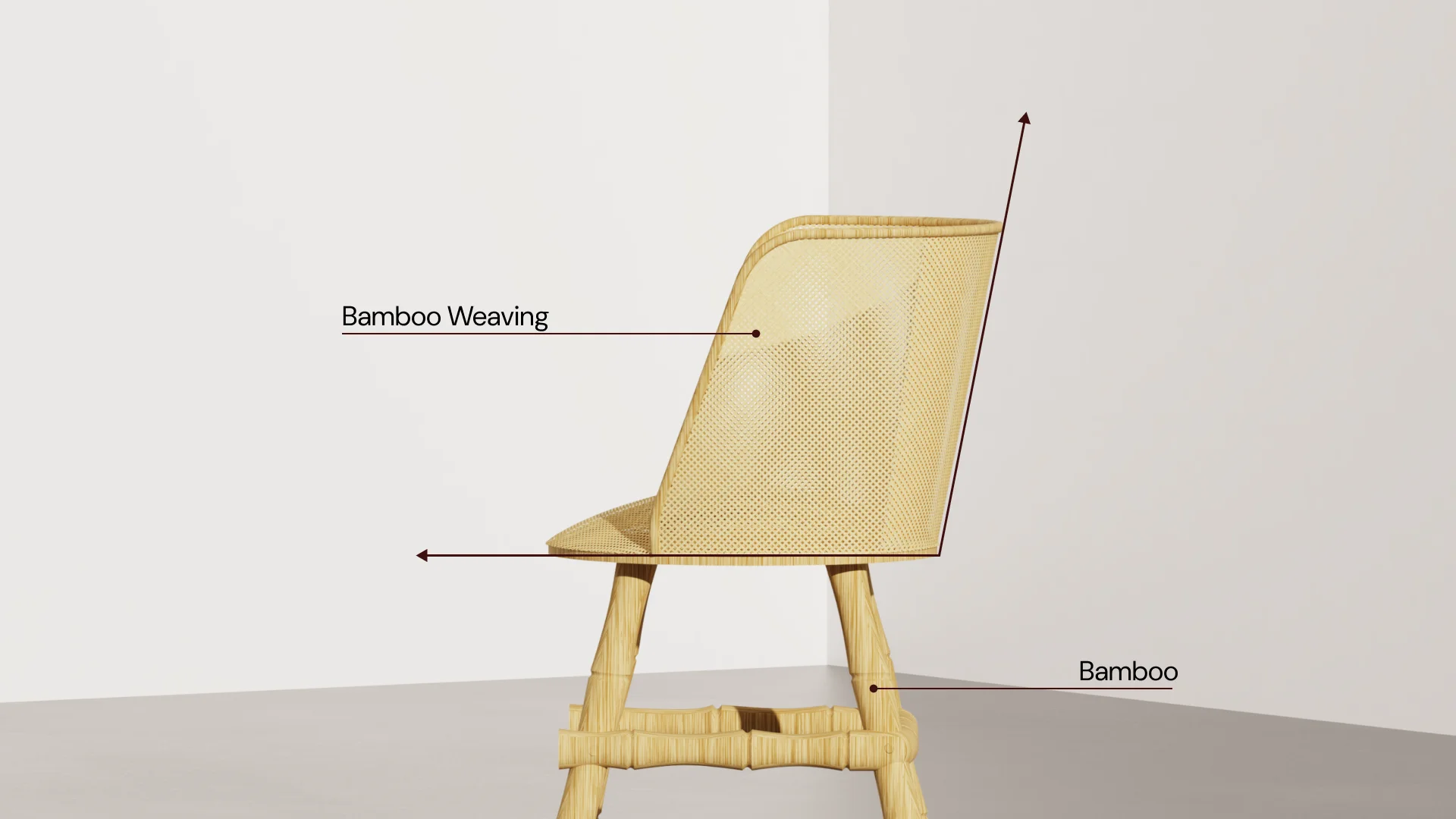
Bamboo becomes both structure and craft surface
Shell:Seat and back use bamboo weaving — light, breathable, and tactile
Legs:Bamboo as primary structural material, connecting the chair to tea house material culture
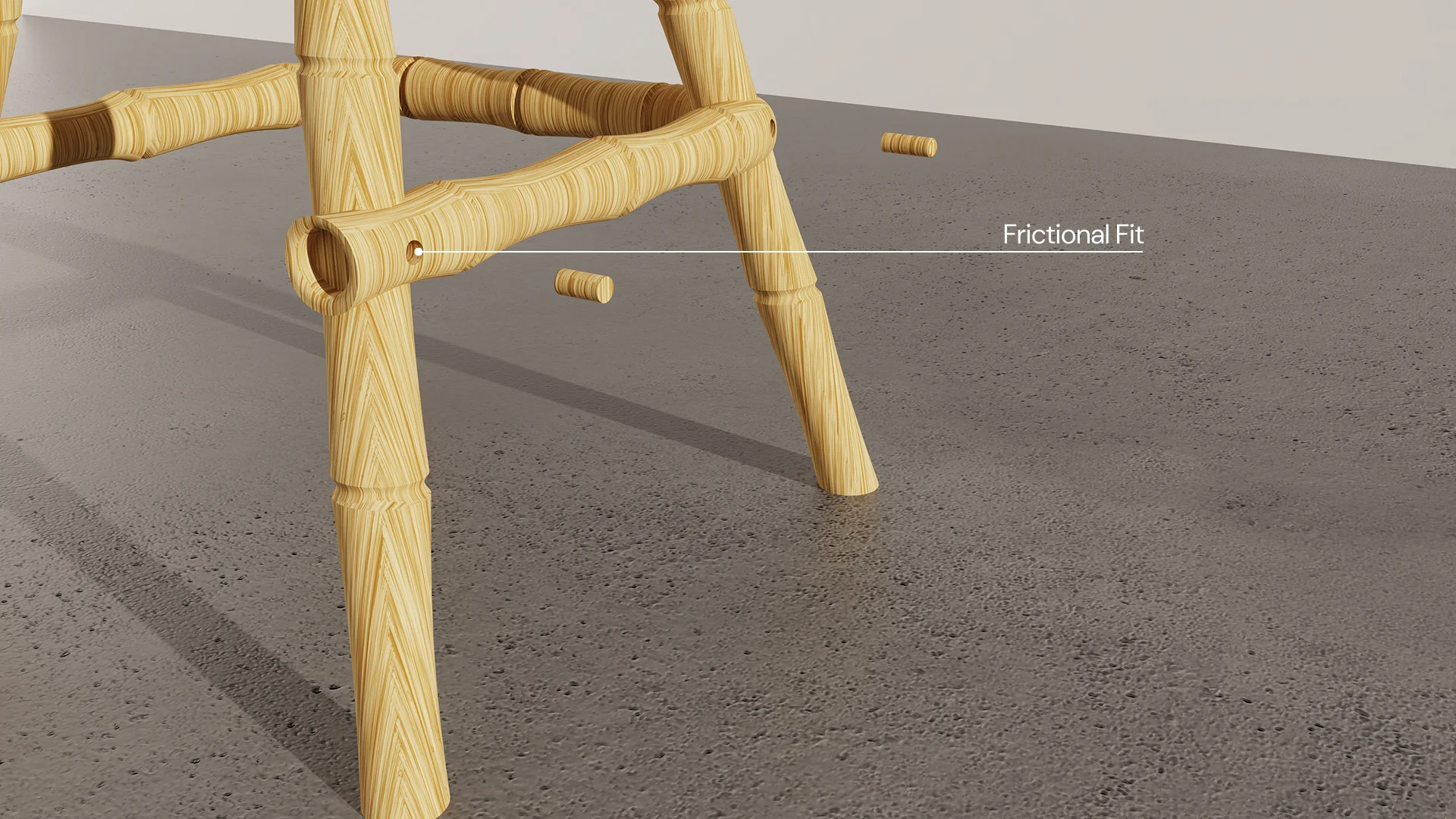
Frictional fit joinery keeps the construction language consistent
The legs are joined using frictional fit — a bamboo joinery method without visible hardware or adhesive. Beyond material consistency, it has a functional benefit: the joint can be disassembled and reassembled without degrading the structure. The nodes where legs meet rungs become a visible design detail rather than something hidden.
Table
The table surface frames the play space
Bamboo board surface:Bordered by bamboo strips to create a crafted, framed playing area
Gold binding:References traditional Chinese furniture metal fittings; marks the boundary of the playing surface
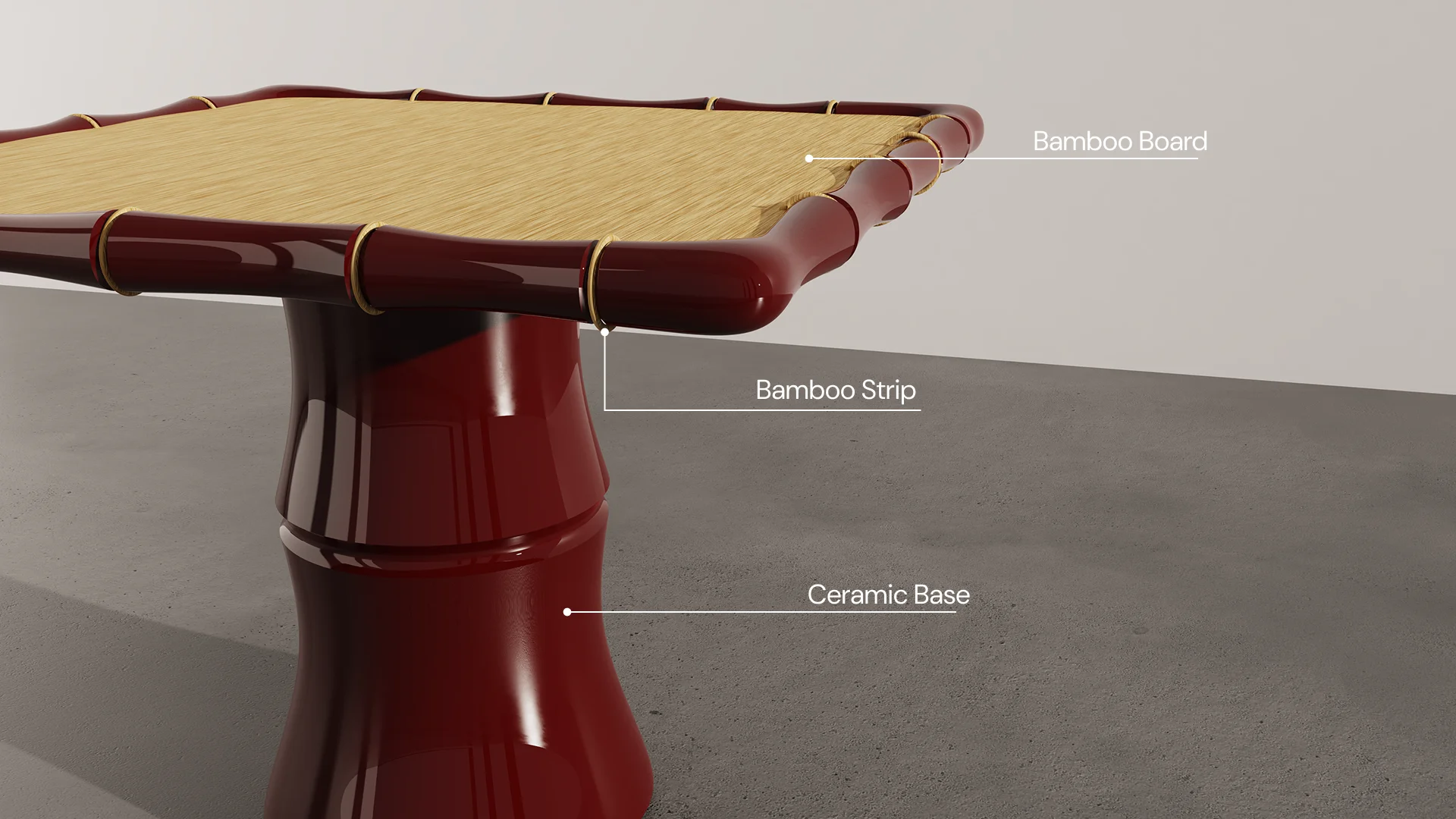
The lacquerware-inspired finish adds Chengdu’s craft identity
The deep red glossy finish references Chengdu lacquerware. Gloss over matte was deliberate — lacquerware’s cultural identity lives in its reflective surface. A matte finish would have softened that signal.
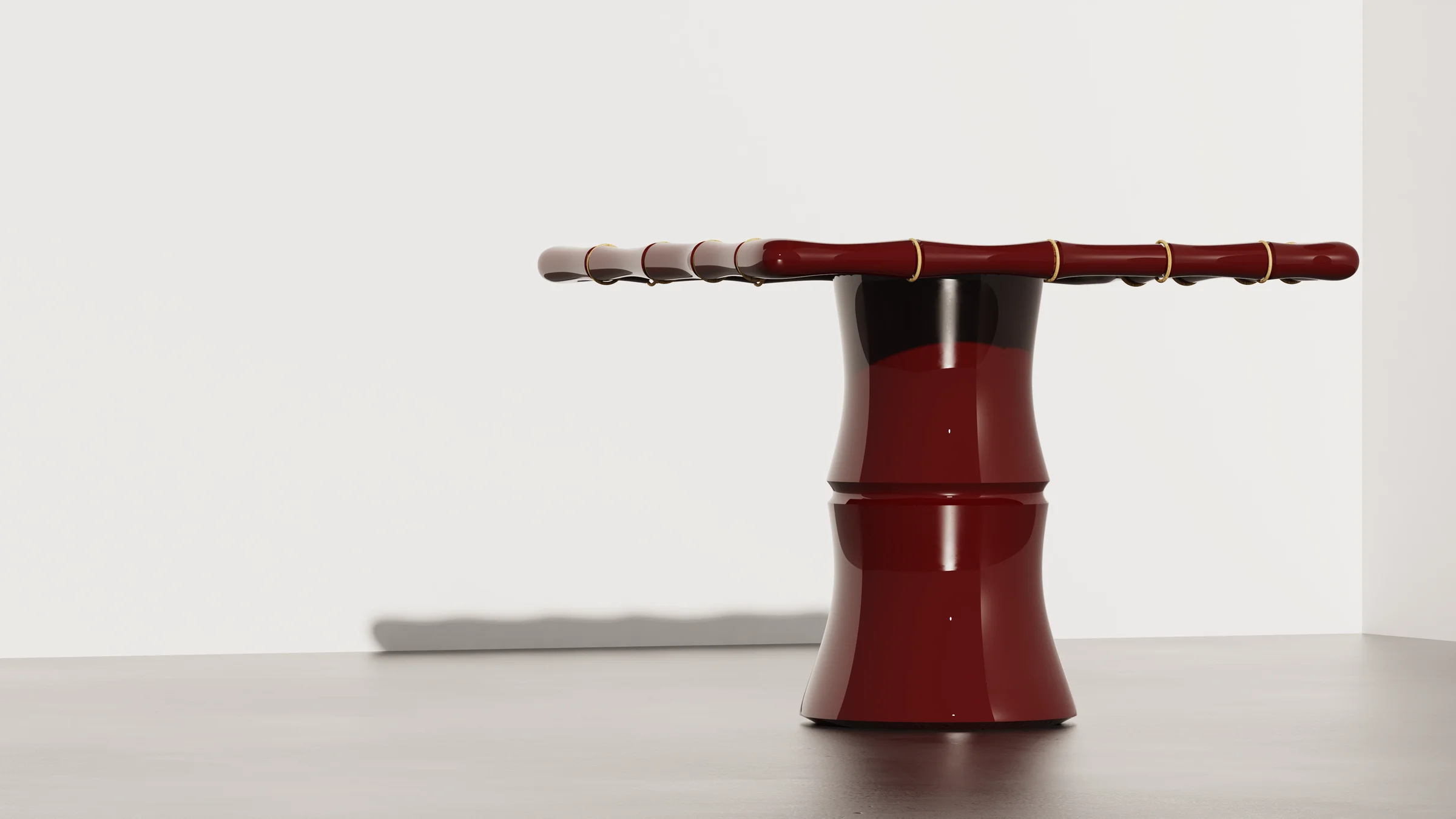
Final Set
A contemporary mahjong set rooted in ease, gathering, and material culture
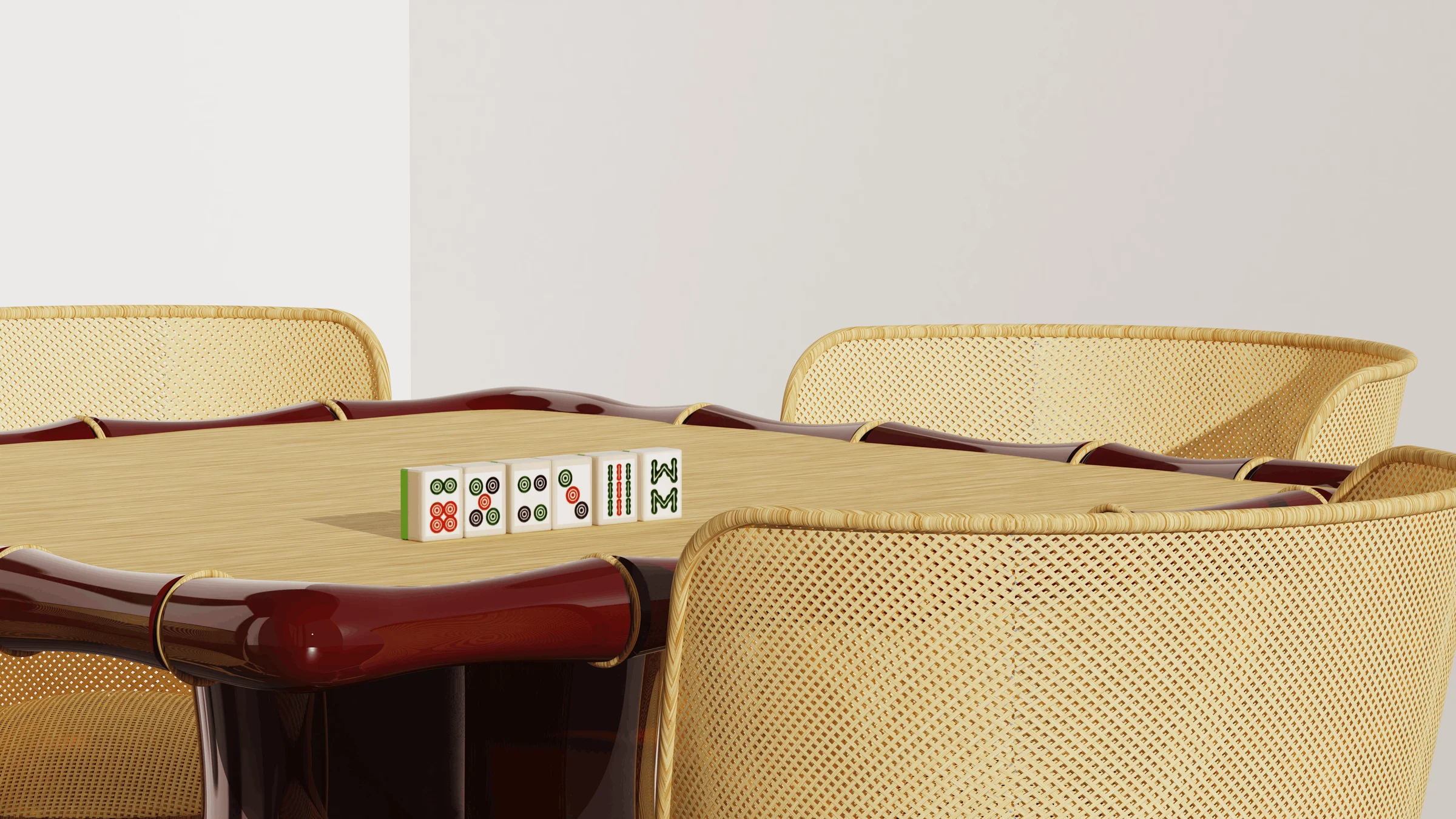
Seen together, the chair and table reinforce each other: the warm, woven bamboo of the chair sits against the lacquered red of the table base; the lightness of the seating is offset by the weight and ceremony of the table. The set carries the feeling of anyi — ease, comfort, and the pleasure of gathering — not through quotation, but through material memory.
Reflection
Anyi was the first project I worked on that didn’t start with a problem. There was no pain point to solve, no user frustration to address — just a culture I grew up close to and wanted to understand more deeply through making. That shift taught me something important: design is not exclusively problem-driven. Sometimes it begins with identity, with material, with a question about what a place or a ritual means and how that meaning can live in an object.
That said, the project never stopped being human-centered. The comfort of sitting for hours at a mahjong table shaped every decision about the chair’s posture, the seat height, the breathability of the woven bamboo surface. The human consideration was just quieter — embedded in the form rather than driven by a brief.
The other thing this project gave me was a clearer relationship with my own cultural identity as a design resource. Chengdu’s material language — bamboo, ceramic, lacquerware — wasn’t just reference material. It was a vocabulary I could actually think in. Anyi taught me that knowing where you come from can make your design instincts more specific, not less universal.
Let's work together.
Currently seeking full-time product design roles for 2026.